
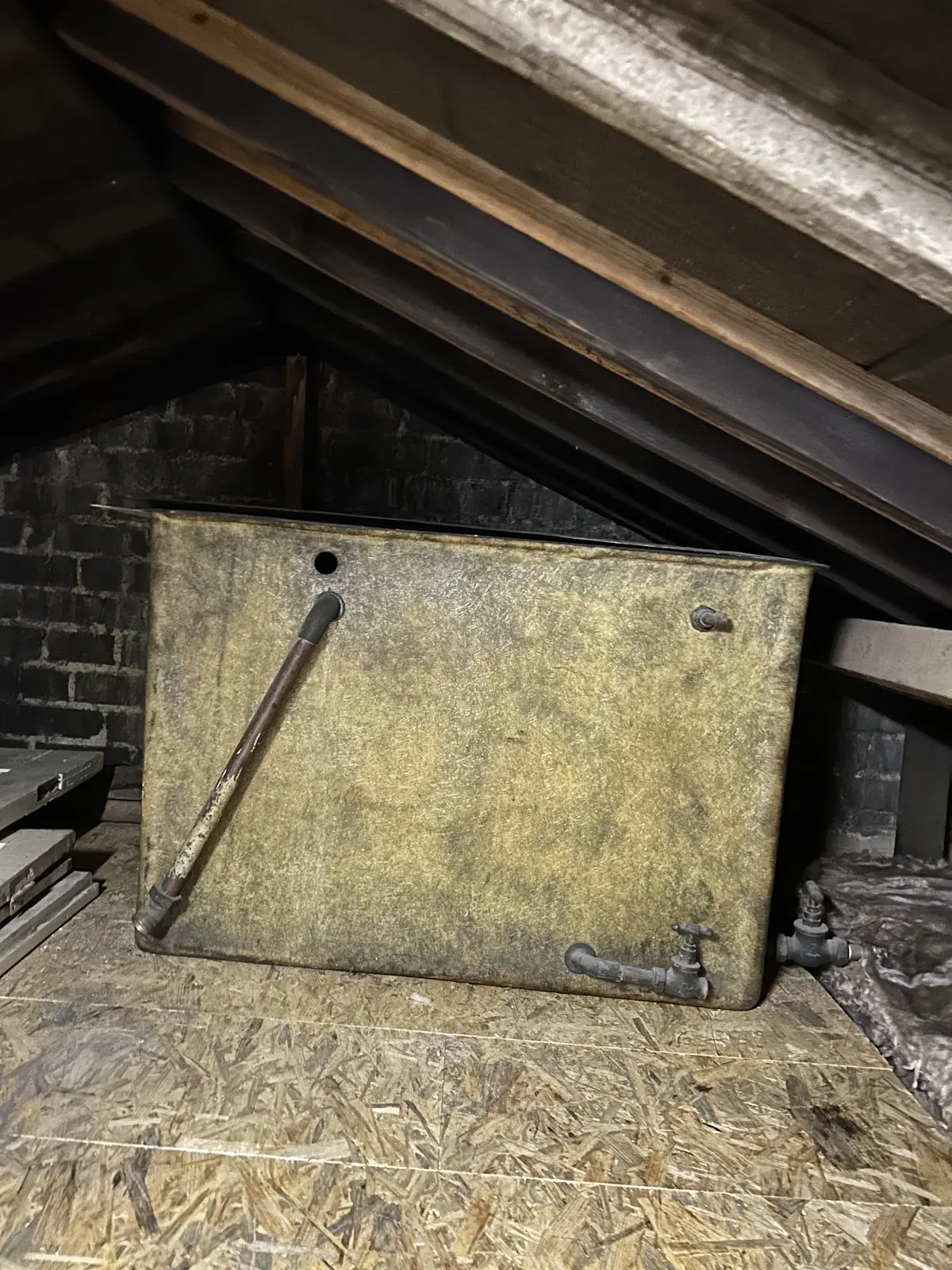
Removing an asbestos cement water tank from a London loft typically costs £360 + VAT, based on 21 London jobs, with most between £340 and £384. Most are taken out in a single visit, often just before a loft conversion or a new combi boiler.
Key facts from our London job records
- Removing an asbestos cement water tank from a London loft typically costs £360 + VAT, based on 21 London jobs. Most cost £340–£384.
- Cement tanks were fitted in lofts from roughly the 1930s to the 1970s, before plastic tanks took over.
- They're usually found when a loft conversion or a new boiler is being planned.
- In a converted house, the loft may belong to the top-floor flat or to the freeholder. Check before booking.
Source: our own completed London jobs. Prices shown + VAT.
London's terraces and semis are full of loft tanks that have sat unused since the heating was modernised. This guide covers how to recognise one, what to do about it in a house or a converted flat, and how removal works when the only way out is through the house.
Is my loft tank asbestos?
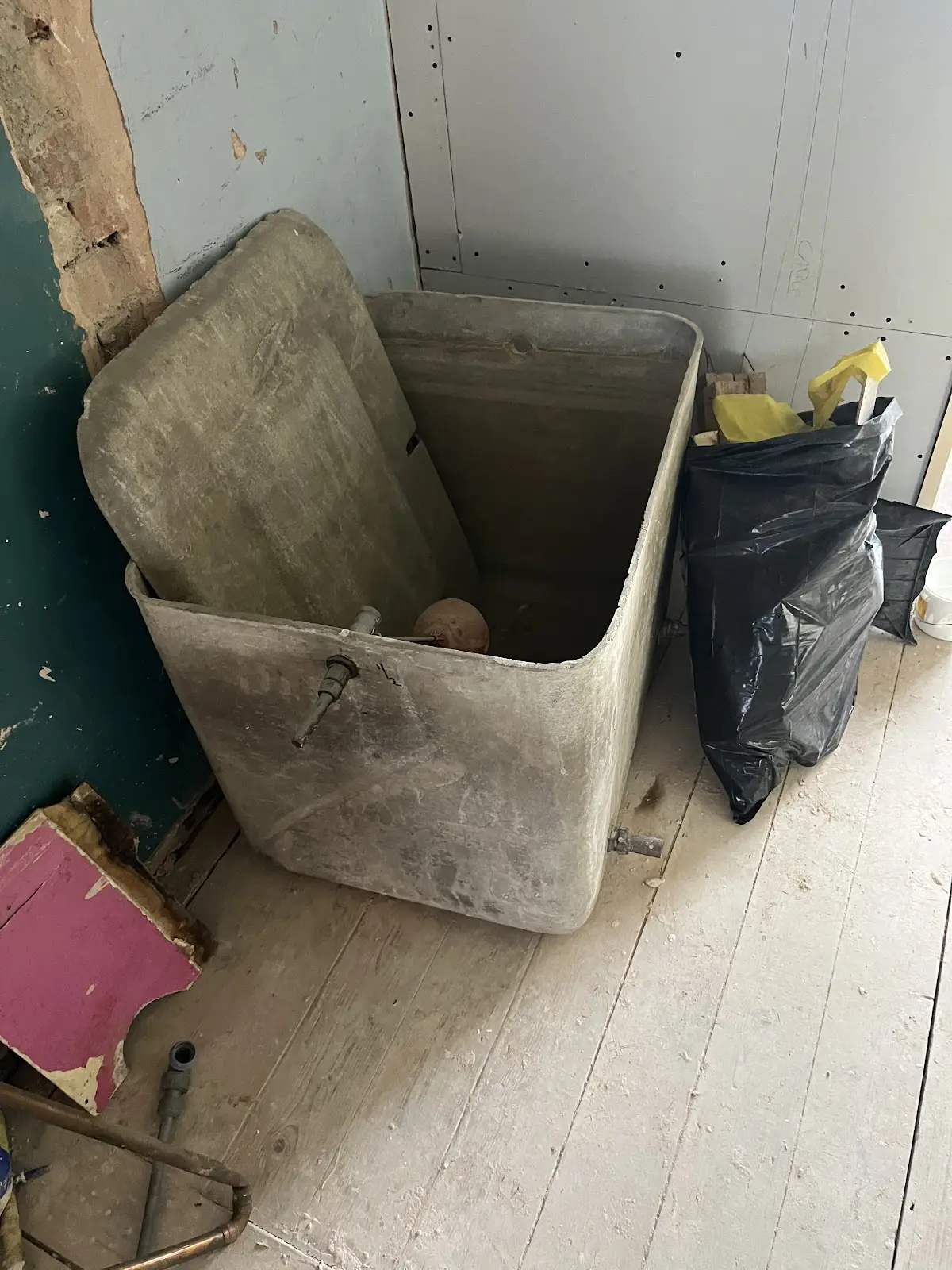
Cement tanks look quite different from plastic ones:
- Grey, rough and heavy, with thick walls of about a centimetre
- Square or rectangular, often with a loose cement lid
- Rust staining around the pipe connections
- No moulded ribs, unlike most plastic tanks
Galvanised steel tanks are also common in older London lofts. They're metal, often rusty, and ring when tapped. They don't contain asbestos themselves, though some had cement lids.
If you're not sure, send us a photo of the tank and a close-up of a corner. A sample test is possible, but most people with a grey cement tank decide to remove it anyway.
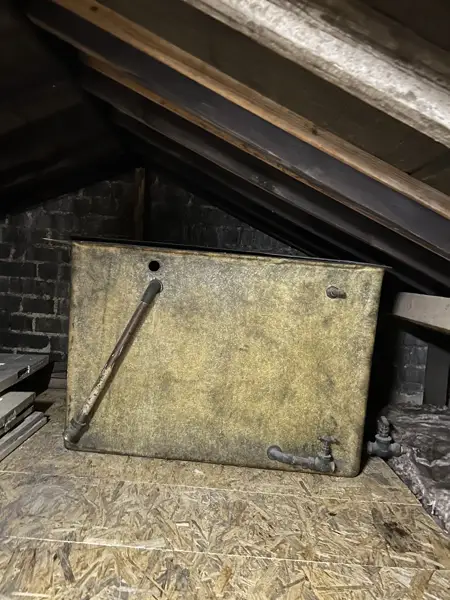
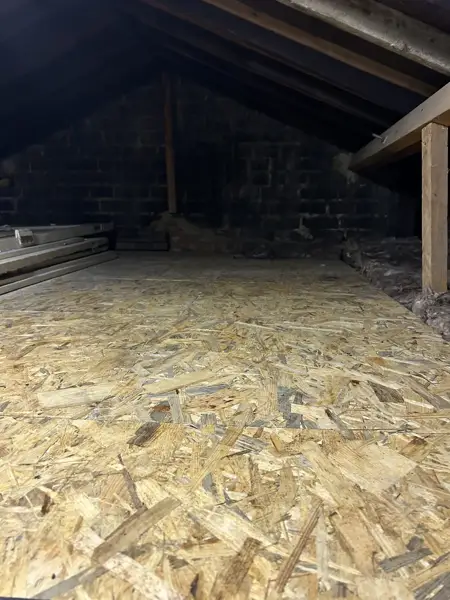 BeforeAfter
Why London lofts still have them
Cement tanks fed the hot water cylinder and cold taps in houses built or plumbed from the 1930s to the 1970s. When households switched to combi boilers or mains-pressure systems, many tanks were simply disconnected and left. They're too big to get through most loft hatches in one piece, so they stayed.
That's why we find them in interwar semis in Hillingdon and Harrow, in Victorian terraces in Islington and Lewisham, and in post-war houses across the outer boroughs.
Leaving it in place
A disconnected tank in good condition, in a loft that nobody uses, is low risk. Many people leave them. Reasons to remove it:
- a loft conversion or new floor is planned
- the tank is cracked or crumbling
- you're boarding the loft for storage
- a buyer's survey has flagged it
Loft conversions: get it out first
Loft conversions are the most common reason we're called. The builder can't work around a cement tank, and breaking it up is exactly what not to do. Book removal before the builder starts, and tell them the date so they can plan scaffolding and skips around it.
If the conversion also involves cutting into old flue pipes or boards in the loft, mention them when you send photos and we'll price them together.
Shared lofts in converted houses and flats
In a house split into flats, the loft often belongs to the top flat or to the freeholder. Before booking:
- Check your lease or title to see who owns the loft space.
- If it's the freeholder's, get written consent for the removal.
- If the tank still supplies other flats, it must be properly disconnected by a plumber first.
- Agree the route through the communal stairs with the managing agent.
Where the loft hatch is inside the top-floor flat, we'll need access through that flat even if the loft is shared.
How removal works
- The tank is drained and checked it's disconnected.
- It's wetted and, if small enough, wrapped whole. Larger tanks are carefully dismantled in sections.
- Pieces are wrapped and sealed in the loft.
- Sealed waste is passed down through the hatch and carried out on protected floors.
- It goes to a licensed disposal site, and you get a waste consignment note.
The whole job usually takes a few hours.
Hatch sizes, ladders and tight lofts
London lofts can be awkward. Victorian terraces often have small hatches on a landing, sometimes above the stairwell, and lofts in some conversions are reached only through a cupboard. None of that stops a tank coming out, because larger tanks are dismantled in sections in the loft, but it helps us to know in advance:
- the size of the hatch, roughly
- whether there's a loft ladder and light
- whether the loft is boarded where the tank stands
- how far the hatch is from the front door
A photo of the hatch from below, alongside the tank photos, is usually all we need.
Prices
| Job size | Typical price + VAT | Usual range + VAT | London jobs |
|---|---|---|---|
| Standard loft tank | £360 + VAT | £340 – £384 + VAT | 21 |
Guide prices + VAT, based on our completed London jobs. Every job is priced from photos or a free site visit.
Combining a tank with other loft items saves a separate visit. An old cement flue pipe, for example, is typically £450 + VAT on its own, based on 11 London jobs.
For landlords
If you let a London house or flat with a cement tank in the loft, make sure tenants and contractors know about it, and keep the hatch closed or locked if the loft isn't part of the let. Removal between tenancies is quick and avoids questions at inventory.
Related guides: asbestos removal cost in London, what asbestos looks like and asbestos in London flats. Or go straight to our water tank removal service.
Frequently asked questions
What does it cost to take out an asbestos loft tank in London?
Typically £360 + VAT, based on 21 London jobs. Most cost between £340 and £384.
How do I know if my loft tank is asbestos?
Cement tanks are grey, rough, heavy and thick-walled, usually with a loose cement lid. A photo by text is usually enough for us to say whether it's cement.
Can the tank stay in the loft if I'm converting it?
No. It needs to come out before the builder starts, and it shouldn't be broken up by the building team.
Who owns the loft in a converted house?
It depends on the lease. Sometimes the top-floor flat owns it; sometimes the freeholder keeps it. Check your lease or title before booking.
Do you need to go through my flat to reach the loft?
If the hatch is inside your flat, yes. Floors along the route are protected, and everything is wrapped in the loft before it comes down.
Service page: Loft tank removal
Prices: every London price table · Areas: all 32 boroughs