
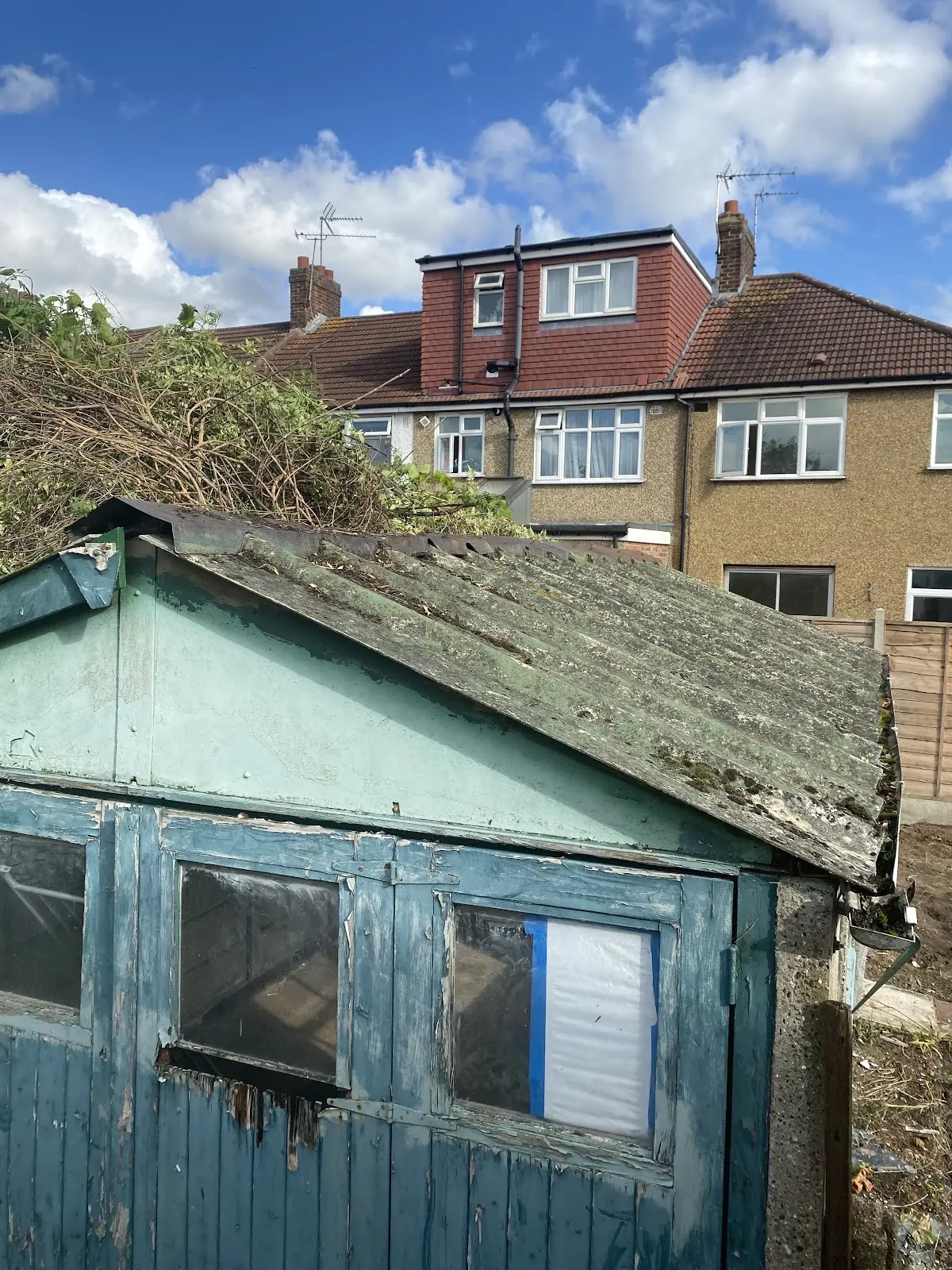
Asbestos rarely looks like anything special: in a London home it usually looks like grey cement sheeting, a swirly ceiling, a square floor tile or a heavy grey tank in the loft. You can't be sure by looking, so the reliable answer is a lab test, which costs about £192 + VAT with us, based on 29 London testing visits.
Key facts from our London job records
- You cannot confirm asbestos by eye. A lab test of a sample settles it, typically £192 + VAT in London, based on 29 London testing visits.
- The places we find it most in London homes: cement roofs on garages and sheds, textured ceilings, old floor tiles, loft water tanks and flue pipes.
- Anything built or refitted before 2000 can contain it. Most London housing is older than that.
- Photos of the item, plus a close-up of a broken edge, are usually enough for us to say whether it looks suspect and to price removal.
Source: our own completed London jobs. Prices shown + VAT.
What you can do is learn where it tends to be and what the suspect materials look like, so you know when to stop and get something checked. The photos on this page are all from our own London jobs.
How to tell if your home has asbestos
Start with the age. If your flat, terrace or semi was built or last refitted before 2000, assume asbestos could be present until a test or survey says otherwise. In practice that covers almost every Victorian and Edwardian terrace, every interwar semi in the outer boroughs and most post-war council blocks.
Then look at the materials, not the colour. Asbestos was mixed into other products as a filler or reinforcement, so it takes on the look of whatever it was mixed into. What gives it away is usually the type of product and where it sits.
Where it hides in London flats and houses
These are the places we find it most often, roughly in order:
- Garage, shed and outhouse roofs. Corrugated or flat grey sheets, often with moss, lichen or a black stain along the overlaps. Common on rear garage blocks in Barnet, Bromley and Croydon, and on outhouses behind terraces in Newham and Barking.
- Textured ceilings. Swirls, stipples and patterns applied as a coating, often called Artex. Very common in flats and terraces decorated in the 1960s to 80s.
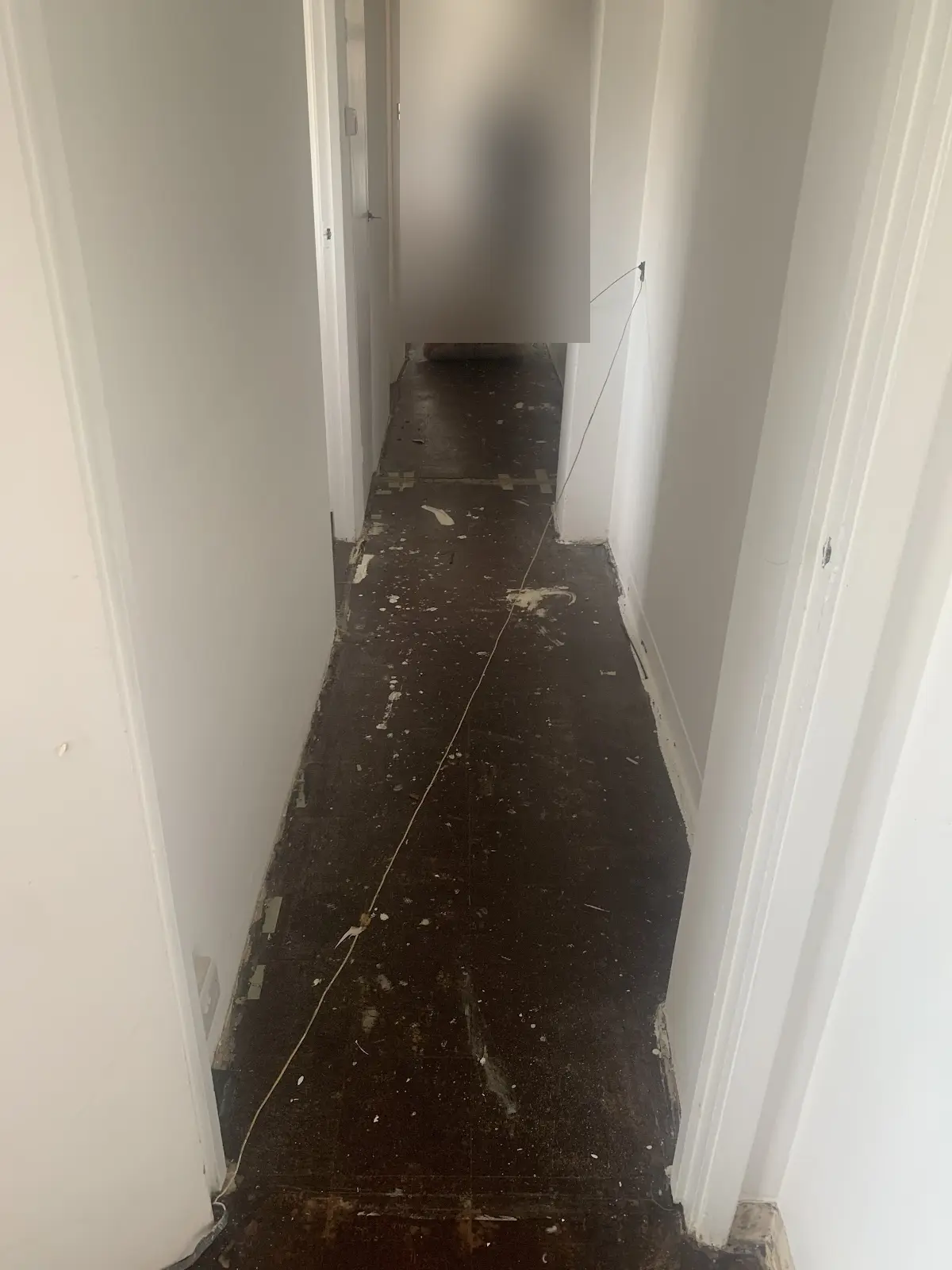
- Floor tiles. Small square tiles, often 9 inches across, in dull browns, greys, reds or black, sometimes stuck down with black tar-like adhesive. They often turn up under carpet or lino in hallways and kitchens.
- Loft water tanks. Heavy grey cement tanks, often found when someone starts a loft conversion.
- Flue pipes and gutters. Grey cement pipes on old boilers and fires, and cement gutters and downpipes on some post-war houses.
- Boards. Flat, slightly soft boards behind fuse boxes, inside airing cupboards, under stairs, around boilers and in some ceiling panels. This is often asbestos insulating board, and it needs more care.
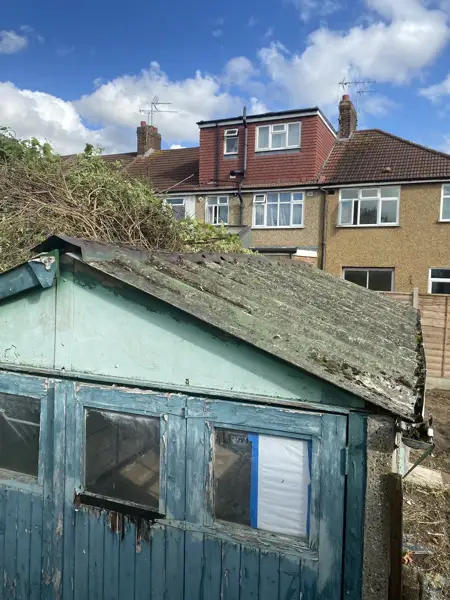
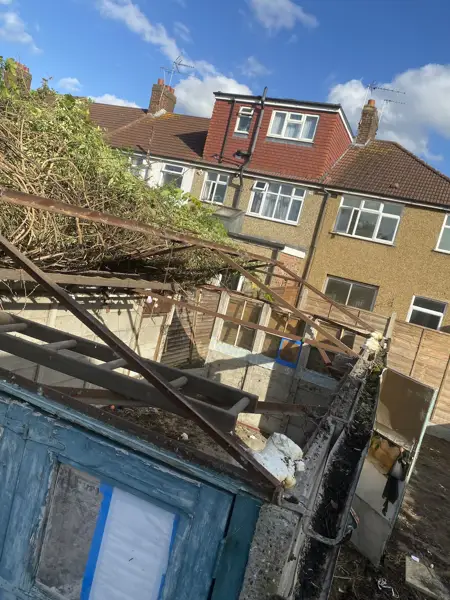 BeforeAfter
What asbestos cement looks like up close
Asbestos cement is the most common type we remove. It is hard, grey and slightly fibrous at a broken edge. Look at a cracked corner or a nail hole and you may see tiny hair-like strands. Newer fibre cement sheets look similar, which is why a test matters if you need to be certain.
Signs that a sheet is likely to be the older asbestos type include a dull, weathered surface with green or black growth, corrugations about 3 inches apart, and a roof that looks like it has been there for decades. Most garages built before the 1990s that still have their original roof fall into this group.
What asbestos ceilings and floors look like
A textured ceiling looks the same whether it contains asbestos or not. The only way to tell is a sample. Many London flats have had layers of paint over the coating, which helps keep it intact.
Old floor tiles are easier to spot by type. Thermoplastic and early vinyl tiles are thin, brittle, and often curl or crack at the corners. If you lift a carpet in a Victorian conversion and find squares stuck down with black glue, treat both the tiles and the glue as suspect.
What you should do if you think you've found it
- Leave it alone. Don't sand, drill, scrape or break it.
- Take two or three photos: one of the whole item and one close-up.
- Text them to us. We'll tell you if it looks suspect and give a price for testing or removal.
- If it's in a communal part of a block, such as a shared hallway or cupboard, tell the freeholder or managing agent before anything is touched.
If you rent your flat, tell your landlord or letting agent. Landlords have to keep homes safe, and they will usually want the test done themselves.
Asbestos in leasehold flats and HMOs
In a block of flats, materials inside your own flat are usually your responsibility, while ceilings, risers, boiler cupboards and hallways may belong to the freeholder. In communal areas the person in charge of the building has a legal duty to manage asbestos, so there may already be an asbestos register for the block. Ask the managing agent for it before paying for a test.
In HMOs the landlord is responsible for the shared parts and for keeping tenants safe, so suspect materials in hallways, kitchens or bathrooms should go to them first.
When to test, and when to go straight to a quote
If you're simply curious about a ceiling or floor, a single sample test is the cheapest answer. If you already know you want the item gone, such as an old garage roof or a loft tank before a conversion, we often skip the test and price the removal from photos. Removal is carried out as asbestos work anyway, so you are covered either way.
For a whole property before major works, a survey is the better option. Read do I need an asbestos survey? and our guide to asbestos testing in London. For specific materials, see Artex in London homes and asbestos insulating board, or go straight to garage roof removal.
Frequently asked questions
Can I tell if something is asbestos just by looking at it?
No. You can spot materials that are likely to contain it, such as cement sheets, textured coatings and old floor tiles, but only a lab test of a sample can confirm it. In London a sample test with us typically costs £192 + VAT.
What colour is asbestos?
The fibres can be white, brown or blue, but you will almost never see them. In a home, asbestos is mixed into cement, coatings, tiles or boards, so it takes on the colour of that product, usually grey, white or brown.
Is every grey garage roof in London asbestos?
Not every one, but most garage and shed roofs fitted before the 1990s that still have their original cement sheets are. Newer fibre cement sheets look similar, so test if you need certainty.
I live in a flat. Who should I tell if I find asbestos?
If it's inside your flat and you own the lease, it's usually yours to deal with, but check your lease. If it's in a communal area, tell the freeholder or managing agent. If you rent, tell your landlord or letting agent.
Can you identify asbestos from photos?
We can tell you whether a material looks suspect and give you a price to test or remove it. For a definite answer, we take a sample and send it to a lab.
Service page: All our London asbestos services
Prices: every London price table · Areas: all 32 boroughs