
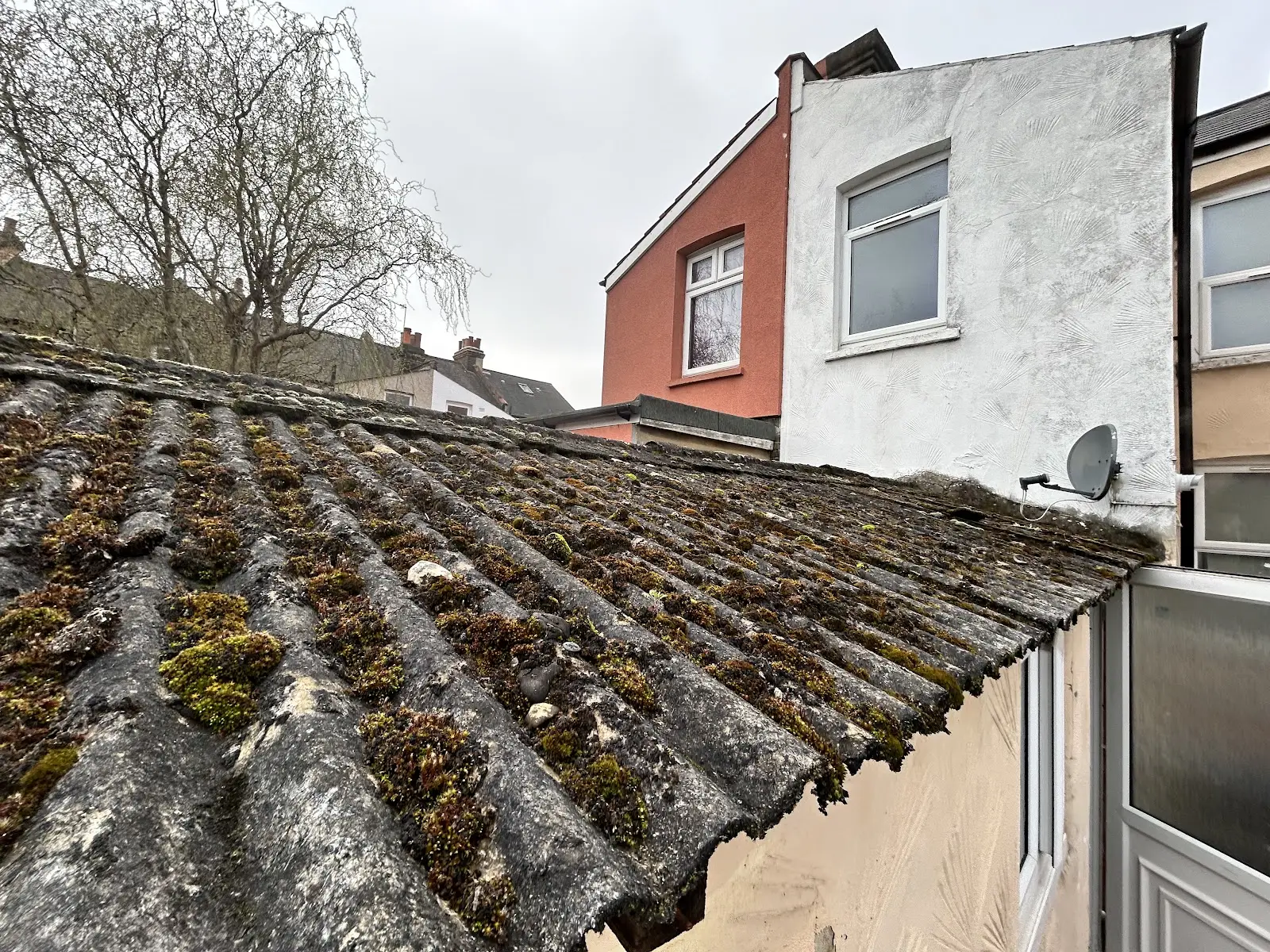
There are six types of asbestos, but three account for almost everything found in British buildings: white (chrysotile), brown (amosite) and blue (crocidolite). In London homes, white asbestos is the type we meet most, usually in cement roofs, ceiling coatings and floor tiles; a lab test, about £192 + VAT, tells you which type a sample contains.
Key facts from our London job records
- There are six regulated types. Three were used widely in Britain: chrysotile (white), amosite (brown) and crocidolite (blue).
- Chrysotile is by far the most common type in London homes, in cement sheets, textured coatings and floor tiles.
- Brown and blue asbestos were banned in 1985, white in 1999.
- A lab test names the type of fibre in your sample. In London it costs about £192 + VAT, based on 29 testing visits.
Source: our own completed London jobs. Prices shown + VAT.
The colour names come from the raw fibre, not the finished product. A roof sheet with white asbestos in it is still grey, so you can't tell the type by looking.
The two families: serpentine and amphibole
Asbestos minerals fall into two groups.
- Serpentine: just one type, chrysotile. Its fibres are curly and flexible.
- Amphibole: five types, including amosite and crocidolite. Their fibres are straight and needle-like, and they stay in the lungs longer.
All six are hazardous and all are treated as asbestos in law. Amphiboles are generally considered more dangerous, which is why they were banned earlier.
White asbestos (chrysotile)
Chrysotile made up the large majority of asbestos used in Britain. It was cheap and flexible, so it went into everyday building products:
- corrugated and flat cement sheets on garages, sheds and outhouses
- cement water tanks, flue pipes, gutters and downpipes
- textured decorative coatings on ceilings and walls
- vinyl and thermoplastic floor tiles and their adhesive
- some roofing felts, mastics and window putties
On a typical London job, such as a garage roof in Bromley or a stippled ceiling in a Lewisham conversion, the lab result is usually chrysotile.
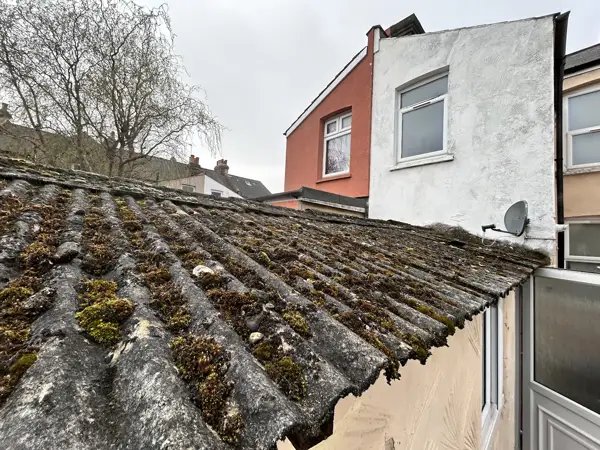
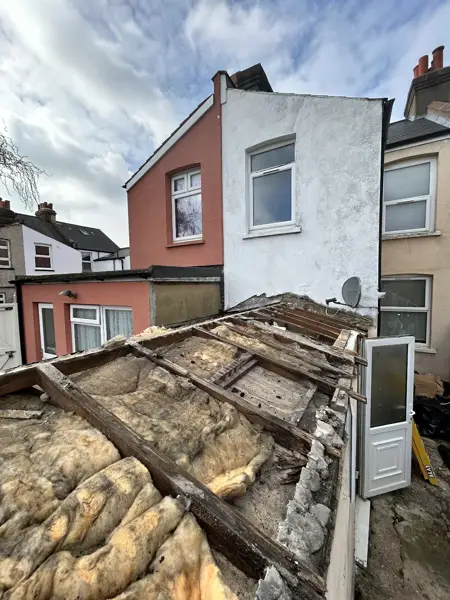 BeforeAfter
Brown asbestos (amosite)
Amosite was used mainly where heat or fire resistance mattered. In homes it is most often found in asbestos insulating board: the panels behind old storage heaters and fuse boards, inside airing cupboards, on the underside of stairs and in some ceiling tiles. It also turns up in pipe lagging in older blocks of flats.
Because insulating board crumbles more easily than cement, work on it is usually licensed. See our guide to asbestos insulating board.
Blue asbestos (crocidolite)
Crocidolite has the thinnest, sharpest fibres and is regarded as the most dangerous type. In homes it's uncommon, but it can appear in some older cement products and in insulation and sprayed coatings in older industrial and commercial buildings. Finding it changes how a job is planned, which is one reason we test before quoting when a material looks unusual.
The other three types
Tremolite, actinolite and anthophyllite were rarely used on purpose in Britain. They mainly occur as traces mixed into other minerals, such as talc or vermiculite. You are unlikely to see them on a lab report for a London house, but they are regulated in the same way.
Does the type change the price or the method?
For most domestic jobs, the material matters more than the fibre type. A cement garage roof is handled the same way whether a test shows chrysotile or amosite, because the fibres are locked in cement. Prices for the common jobs are below, based on our completed London work.
| Job | Typical price | London jobs behind it |
|---|---|---|
| Single garage roof (1–10 sheets) | £575 + VAT | 59 |
| Artex ceiling, all sizes | £1,140 + VAT | 37 |
| Floor tiles, all sizes | £750 + VAT | 27 |
| Loft water tank | £360 + VAT | 21 |
Guide prices + VAT, based on our completed London jobs. Every job is priced from photos or a free site visit.
Where type does matter is with insulating board, lagging and sprayed coatings. These are usually licensed work, and the fibre type helps decide the controls needed.
What a lab report looks like
When we take a sample, it goes to an independent laboratory for analysis. The report you get back lists each sample, where it came from in the property, and the result: either "no asbestos detected" or the type or types found, such as "chrysotile" or "chrysotile and amosite". It won't give a percentage for most samples, and it won't tell you whether the material is safe to leave.
That second question is a judgement about condition and location. A painted, intact ceiling coating in a bedroom is usually fine to leave; the same coating in a kitchen you're about to rip out is not. If you send us the report and a few photos, we'll tell you what we'd do and what it would cost.
Mixed results in older London conversions
Houses converted into flats have often been altered several times. It's common for one room in a Victorian conversion to test positive and the next to come back clear, because ceilings were replaced at different times. If you're planning work across a whole flat, test each different-looking material rather than assuming one result covers everything.
Getting a sample tested in a flat or HMO
If the suspect material is inside your flat, you can usually arrange the test yourself. If it's in a shared hallway, a riser or a boiler cupboard that serves the building, speak to the freeholder or managing agent first: they may already hold an asbestos register with lab results. Landlords of HMOs should test suspect materials in shared areas as part of managing the building.
Read more in what asbestos looks like, is asbestos dangerous? and our asbestos testing service page.
Frequently asked questions
What are the three main types of asbestos?
Chrysotile (white), amosite (brown) and crocidolite (blue). Between them they make up almost all the asbestos used in British buildings.
Which type of asbestos is most common in London homes?
White asbestos, chrysotile. It's the type we find most in cement garage roofs, textured ceilings and old floor tiles.
Is white asbestos safe?
No type of asbestos is safe to breathe. Chrysotile is generally considered less hazardous than blue or brown, but it still causes serious disease and must be handled as asbestos.
Can a test tell me which type I have?
Yes. The lab report names the fibre type or types found in the sample. In London our testing visit, including the lab analysis, typically costs £192 + VAT.
When were the different types banned?
The UK banned blue and brown asbestos in 1985. White asbestos was banned in 1999.
Service page: All our London asbestos services
Prices: every London price table · Areas: all 32 boroughs