
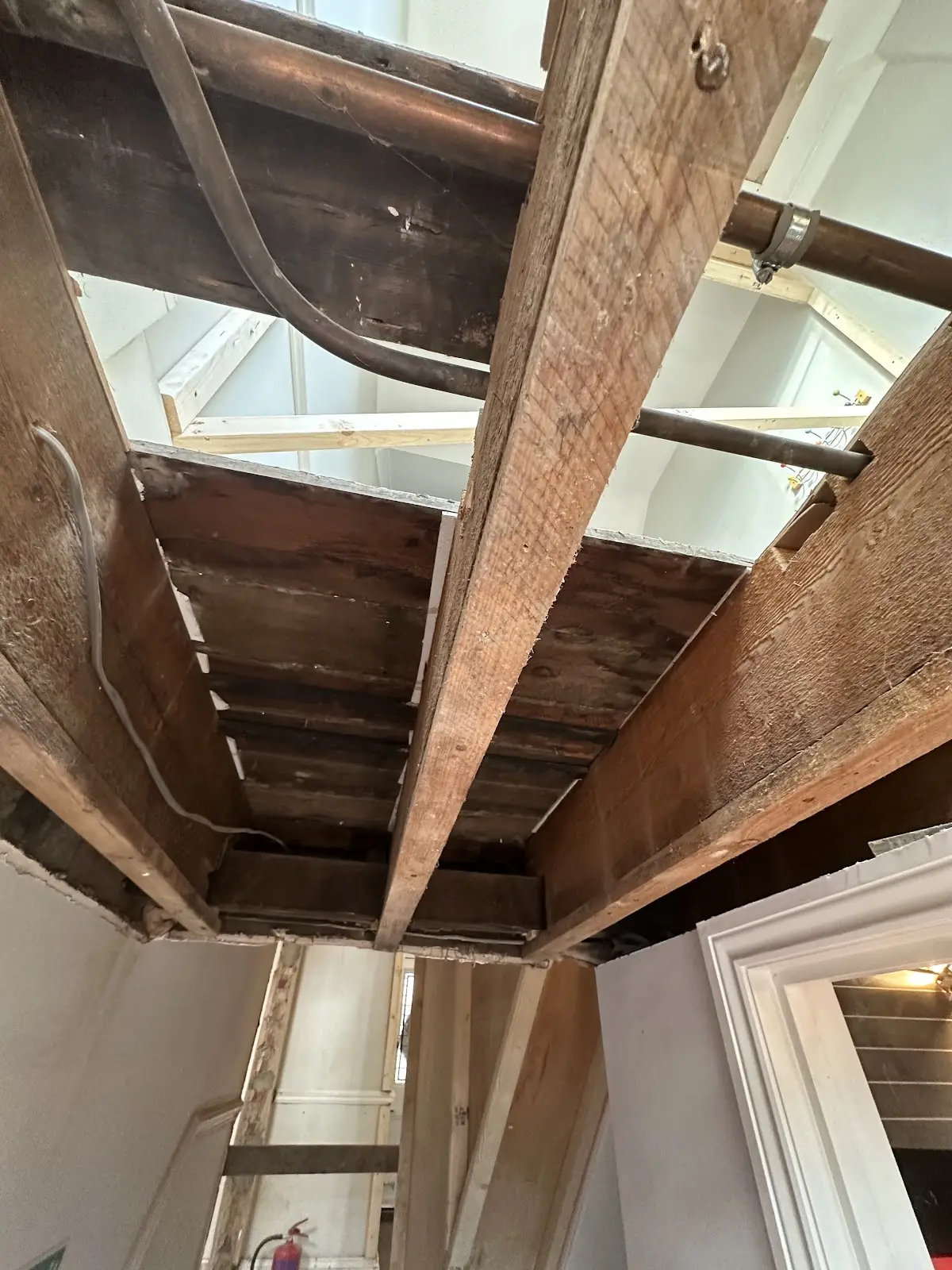
Asbestos insulating board, or AIB, is a soft, fire-resistant board that releases fibres much more easily than asbestos cement, which is why most work on it needs a licensed contractor. In London it's most often found in flats and conversions: in boiler cupboards, behind old storage heaters, around fuse boards and in ceilings. We price AIB individually after inspection, based on 8 London AIB jobs in the last two years.
Key facts from our London job records
- AIB was used for fire protection and insulation from the 1950s to the early 1980s, often containing brown asbestos (amosite).
- It is softer and more crumbly than asbestos cement, so it releases fibres far more easily.
- Most AIB removal is licensed work. We price it individually after inspection.
- We have handled 8 London AIB jobs in the last two years, mostly in flats and conversions.
Source: our own completed London jobs. Prices shown + VAT.
If you think you've found it, don't drill, cut or break it. Send photos and we'll tell you what it looks like and what happens next.
What is asbestos insulating board?
AIB was made from asbestos fibres mixed with lime and silica or cement, pressed into sheets. It was light, easy to cut and resisted fire and heat, so builders used it wherever they needed a fire barrier or insulation. It typically contains brown asbestos (amosite), sometimes with white.
Compared with asbestos cement, AIB is much less dense. Press a fingernail into it and it may mark; knock a corner and it crumbles rather than snapping cleanly. That softness is what makes it higher risk.
Where AIB hides in London homes
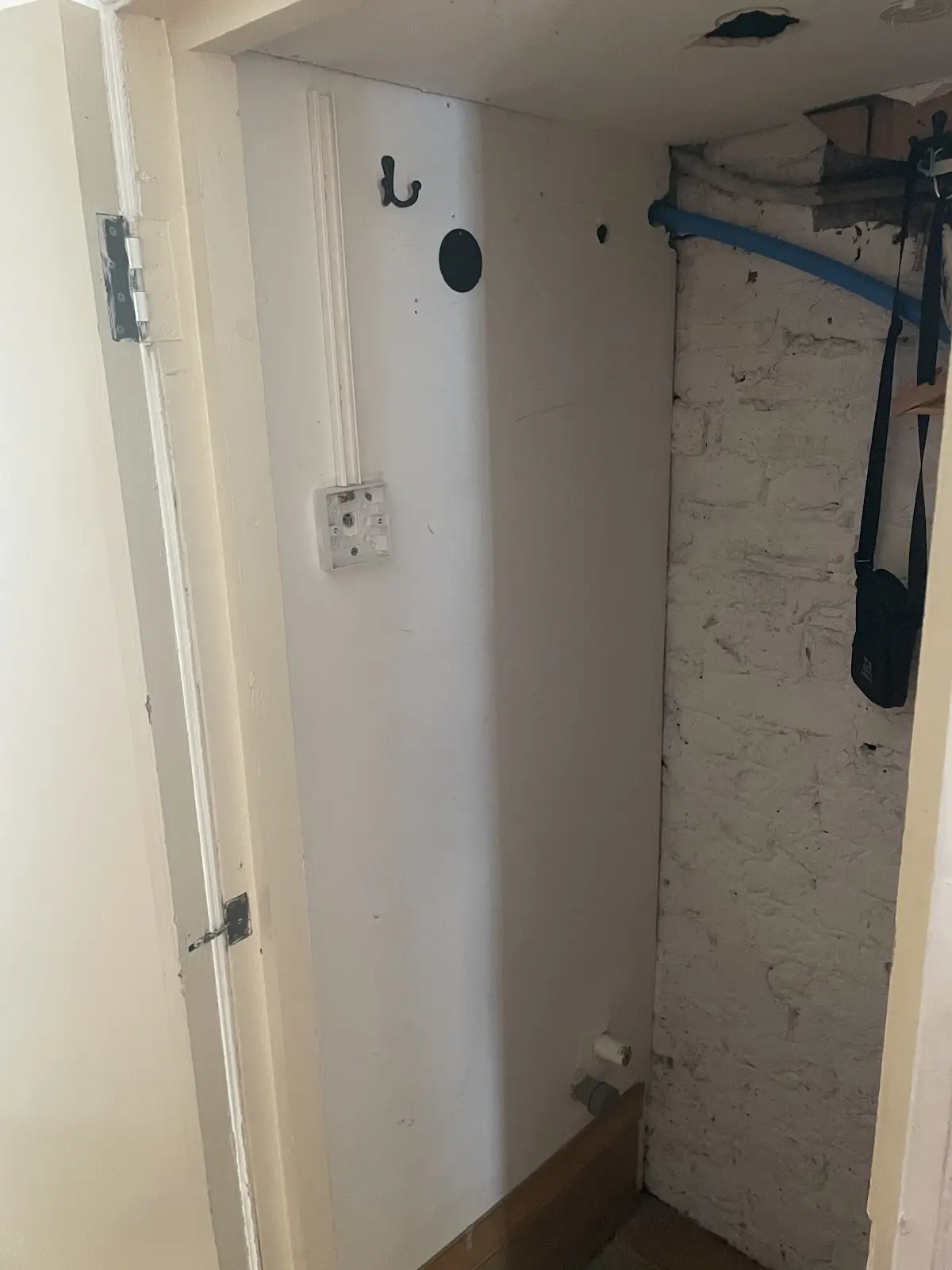
- Boiler and airing cupboards. Lining the walls or ceiling behind an old boiler or hot water cylinder.
- Storage heaters. Old night storage heaters often had AIB panels inside, and the wall behind them was sometimes lined with it.
- Fuse boards and meter cupboards. Backing boards and the cupboard lining, especially in post-war flats.
- Ceilings and soffits. Ceiling tiles in kitchens and bathrooms, and soffit boards under balconies and eaves.
- Fire doors and partitions. Panels in fire doors to flats and in the walls of stairwells in older blocks.
- Under stairs and around chimney breasts. Fireproofing behind fires and stoves.
Post-war blocks from the 1950s to the 1970s, and houses converted into flats in the same period, are where we see it most.
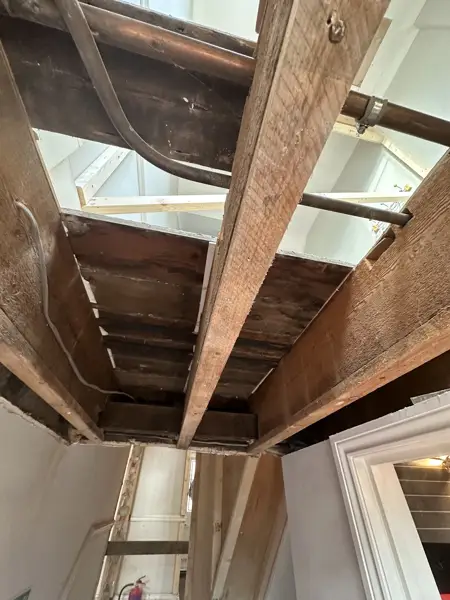
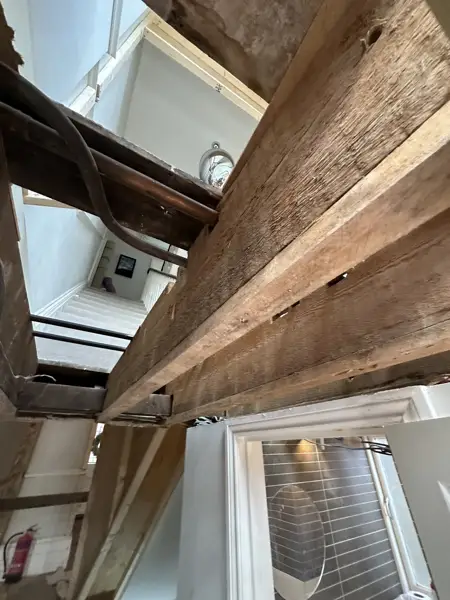 BeforeAfter
Why is AIB higher risk?
Fibres in asbestos cement are locked in a hard matrix. In AIB they are held much more loosely, so drilling a single hole, unscrewing a panel or breaking a board can release far more fibres. That's why the regulations treat most AIB work as licensed, with enclosures, controlled removal and air testing.
Short, minor work on AIB, such as drilling a small number of holes, can sometimes fall outside licensing, but that's for a trained contractor to judge on site. As a homeowner, treat any board you suspect as AIB as something not to touch.
Is it AIB or something else?
Several boards look alike: AIB, asbestos cement sheet, plasterboard and modern fibre cement. Clues that a board might be AIB:
- it's in a fire-risk spot, such as around a boiler, heater or fuse board
- it's in a home built or refitted between the 1950s and early 1980s
- it feels softer and lighter than cement
- the back or edge looks fibrous rather than gypsum-white like plasterboard
Only a lab test confirms it. Our testing service costs about £192 + VAT for a sample visit, based on 29 London visits.
AIB in leasehold flats and blocks
In a block, AIB often sits on the line between your flat and the building. A cupboard lining inside your flat may be yours; boards in a riser, a communal hallway ceiling or a fire door may be the freeholder's. Before anything is removed:
- Check the block's asbestos register with the managing agent.
- Ask whether the board is part of your demise or the building's structure.
- Get consent in writing if the lease requires it.
If AIB is damaged in a communal area, report it to the managing agent straight away. They have a duty to manage asbestos in the shared parts.
How AIB removal works and is priced
Because most AIB removal is licensed, the job is planned in more detail than a garage roof. It usually involves an enclosure around the work area, controlled wet removal, air monitoring and a four-stage clearance before the area is handed back. For small amounts that turn out to be non-licensed, the approach is simpler.
That is why we don't publish a set AIB price. It depends on the amount, where it is, whether it needs a licensed contractor and how access works in your building. We price it individually after inspection, starting from photos.
Options other than removal
AIB in good condition and away from any planned work can sometimes be left and managed: sealed, labelled and checked periodically. That's often the cheaper choice in a block where the board is behind a fire door or in a sealed cupboard. If you're refurbishing, though, it needs to come out before work starts.
Related reading: types of asbestos, licensed vs non-licensed work, asbestos air testing and asbestos in London flats.
Frequently asked questions
How much does AIB removal cost in London?
We price asbestos insulating board individually after inspection, because the cost depends on the amount, the location, access and whether the work is licensed. Start by sending us photos.
Does AIB removal need a licensed contractor?
In most cases, yes. Some short, minor work on AIB can be non-licensed, but that is decided by a trained contractor after looking at the board and the work involved.
Is there AIB behind my old storage heater?
It's possible. Old storage heaters often contained AIB panels, and the wall behind was sometimes lined with it. Don't dismantle the heater; get it checked first.
How can I tell AIB from plasterboard?
Plasterboard has a white gypsum core and paper faces. AIB is a single fibrous board, often softer and lighter than cement. A lab test confirms it.
Who deals with AIB in the communal parts of my block?
The freeholder or managing agent. They have a duty to manage asbestos in shared areas and should hold an asbestos register for the building.
Service page: All our London asbestos services
Prices: every London price table · Areas: all 32 boroughs